delivers exceptional thermal insulation without sacrificing breathability.


Welcome to MGN
MGN was founded on the extensive experience of master craftsman Naldo Busato, who has been producing plasters and mortars based on traditional formulations for over 40 years. By combining practical expertise, important academic and professional collaborations, and modern production technologies, he has developed a range of materials with unique and highly specialised characteristics.
The company specialises in the production and faithful reproduction of traditional plasters and mortars for building conservation and specialist applications. MGN products are also widely used in new construction, where they contribute to high-quality, comfortable and healthy living environments.
MGN’s product range includes: dehumidifying plasters, cocciopesto-based plasters, through-coloured decorative plasters, thermal insulating plasters, natural marmorino finishes, mortars for bedding and pointing, structural consolidation mortars, cocciopesto screeds, and materials for Venetian terrazzo and pastellone applications. All products are manufactured and certified in accordance with current regulations.
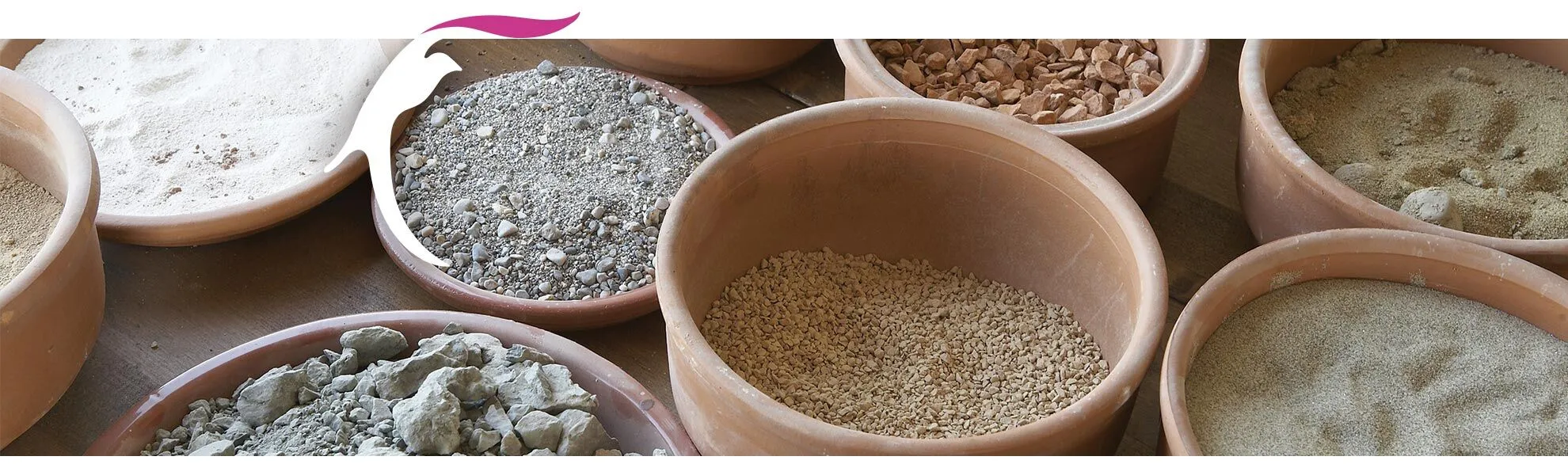
Cocciopesto is a high-performance lime plaster with a history of more than 2,000 years, combining material science, traditional craftsmanship, and timeless aesthetics.
It is produced by blending slaked lime with finely crushed terracotta, typically derived from broken tiles, bricks, or pottery. This mixture creates a distinctive warm pink to rust-coloured surface that is both visually appealing and highly durable, while remaining highly vapour permeable.
Its performance is based on chemistry. The powdered terracotta reacts with lime in a pozzolanic reaction, creating a hydraulic set. As a result, cocciopesto can harden even in damp conditions and develops natural tolerance to moisture.
For this reason, the material was widely used in Roman construction, including baths, cisterns, floors and wall plasters, particularly in areas exposed to moisture.
Natural building solutions for lasting protection, comfort, and performance.
Waterproofing, thermal insulation, and Venetian floors
— engineered for healthier spaces.
Naldo Busato's mastery is a family affair: since childhood, he has visited construction sites with his father, Felicetto “golden hands”, a bricklayer and master restorer.
Accompanying him to work, at the age of 9 he visited Villa Porto in Dueville, which at the time needed restoration work on its plasterwork and frescoes. This was his first encounter with Palladio. Palladian villas are a familiar feature of the Veneto landscape. They seem to emerge here and there from the countryside, like a legacy of a splendid past, faded by the weight of centuries and yet still full of splendour and, above all, repositories of ancient craftsmanship. The encounter with such majestic architecture and technique had a profound effect on Naldo, even though he was only a child. Finally, at the age of 11, he received a special Christmas present: a huge jute sack containing a restorer's tools: trowels, small trowels, wooden floats... His destiny was sealed, and a passion was born that would become his profession.
Naldo took his first steps in the world of restoration guided by his father’s teachings: master craftsmen traditionally passed on their skills and knowledge in this way, from father to son. He began working alongside him on building sites—villas, palazzos, churches…
He learned how to mix mortar with a mortar hoe, prepare a lime pit, and master the techniques of fresco painting and pouncing. It was a true apprenticeship of yesteryear, his task being to absorb everything his master had to teach him. It was precisely this drive to seek out and preserve techniques and methods that were dying out—replaced by the new ways of building during the economic boom—that would characterize Naldo Busato’s entire career from then on.
One day, a craftsman specializing in marmorino plaster, who had no children to pass on the trade to, asked Felicetto for a “borrowed son” to take into his workshop. Naldo was chosen from among the Busato brothers. “Give me the most passionate one, so that I can teach him everything I know and continue my story.” And the most passionate one, of course, was Naldo: he changed master and workshop, ready to learn more and further perfect his technique.
The moment when Naldo Busato is truly put to the test—when he realizes that he has learned everything there is to know for the time being—comes at the age of 15. He is working on the restoration of a church. The fresco painter called in to do the paintings needs someone to lay the outlines on which he will paint. Of all the builders in the company, he chooses Naldo: as the son of a master craftsman, he should be a safe bet… but will that be enough?
No—he is put to the test anyway. First, he is questioned on the materials and techniques he knows; then it is on to the practical side, with an application test. Naldo passes with flying colours, much to the envy of his senior colleagues (though not for his technique), and is entrusted with preparing the base for the fresco—marking it with a nail and pouncing the design—until it is ready for the painter to add the sky, the cloaks, and the rest of the work that will be grafted onto it.
Between the late 1970s and early 1980s, Naldo Busato, thanks to his talent, began collaborating with shipyards in Venice, during a period of significant restoration work. His professional success was swift: in 1980, he founded MGN and had the unique opportunity to learn the ancient Venetian application techniques directly from the last true Venetian masters.
MGN was born out of the need to recreate natural lime plasters for the restoration of historic buildings and distribute them in premixed form. It became the first company in Italy to supply recreated custom materials based on original samples, using the exact raw materials.
Equally important, the immense experience of the last Venetian masters—whose technical skills were on the verge of being lost—was available to him. Many of these masters had no one to pass on their craft to, as social change meant their children often chose different paths. They were desperately seeking someone to teach, so that their work and knowledge would not die out.
The professional peak of a master craftsman is achieved not only through personal accomplishment but also by passing on knowledge and leaving apprentices behind. The last Venetian masters found an heir in Naldo, whose dedication and talent allowed him to absorb their expertise, greatly enriching his own knowledge and practical techniques.
The need for new, higher-performance materials was growing. Naldo Busato undertook a series of research projects in collaboration with the Superintendency, the Politecnico di Milano, and a researcher from Naples. By studying Roman mortars, he ultimately succeeded in creating a restoration material that was truly durable and capable of withstanding the harsh conditions of Venice.
His Venetian experience allowed him to work directly with the Superintendency and its laboratory, embracing the role of science in historic restoration. His research into dehumidifying masonry began locally, addressing specific Venetian needs. Collaborating with the Politecnico di Milano, he studied Roman mortars on-site, and conducted extensive laboratory testing to reproduce their properties.
The first major breakthrough came in 1985, when a researcher from Naples, an expert in pozzolans, explained the technical and scientific properties of Roman mortars and illustrated them on buildings during a visit to Pompeii. Drawing on this knowledge, Naldo succeeded in developing a long-lasting restoration product.
Many of the construction sites in Venice where this product was applied during those years remain intact today.
Andrea Palladio's creations — things had changed considerably compared to many years earlier. Now he was the one working on site, backed by years of experience and supported by modern material analysis techniques. In a short space of time, he found himself restoring numerous villas, reproducing their original materials. The rigour of historical reconstruction gave rise to products such as Nigra Padoana, one of the plasters used by Palladio, which remains in the catalogue today.
In the 1990s, it was a short step from Venice to the rest of Italy: Bari, Naples, Rome… Following his products from creation to application, Naldo Busato continually sought out the local old masters, further expanding his knowledge. The result of this journey is an enormous wealth of technical expertise—ancient knowledge now condensed into the excellence of MGN products.
In 2003, the MGN laboratory was established, entirely dedicated to the analysis of materials and formulas and accredited by Accredia. It was strongly desired by master Busato: after relying on external laboratories and that of the Superintendency during his years in Venice, he knew how important it was to test a product in all conditions. It was a step towards the future, dictated by the essential need for better, more durable and sustainable materials.
Protect from moisture. Preserve warmth. Retain natural heat.
Advanced lime-based systems engineered for longevity and energy efficiency.
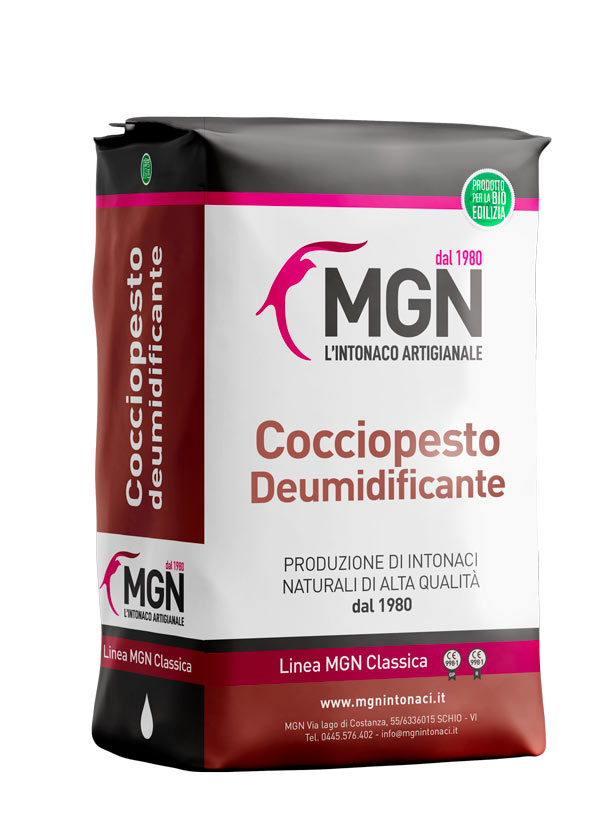
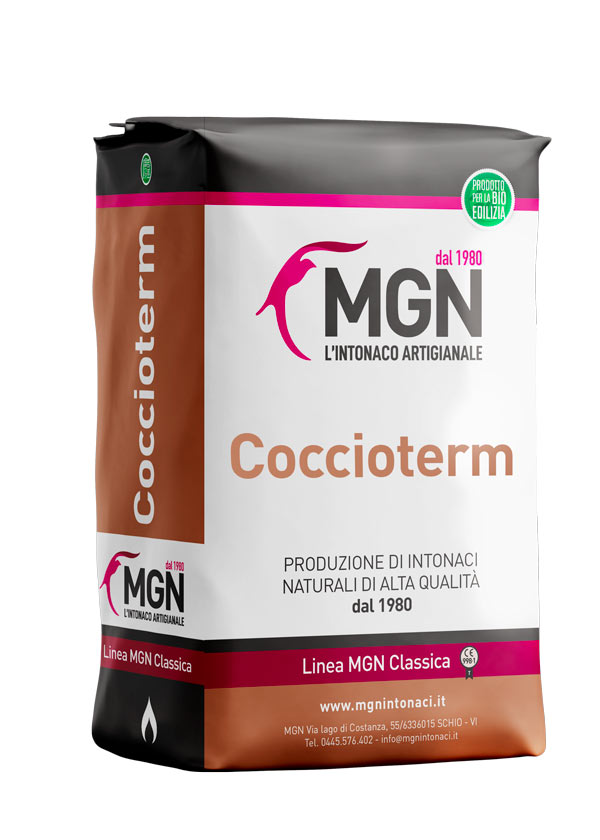
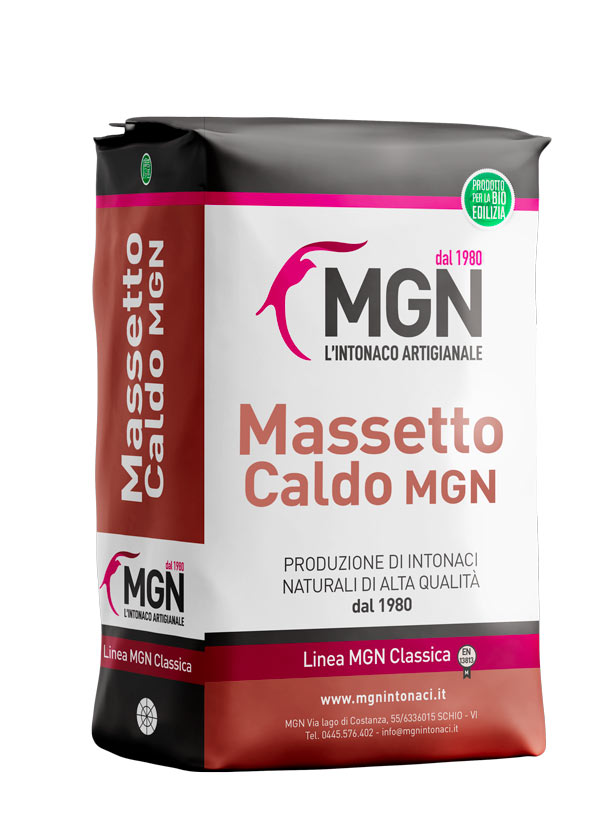
stops moisture at its source while keeping walls breathable and durable.
delivers exceptional thermal insulation without sacrificing breathability.
West Sussex
The building was erected around 1700 and originally functioned as a watermill. Whenever we have heavy rainfall — like earlier this year — the water can rise by up to six feet in 12 hours, flooding the building. The work was carried out over the last six to eight weeks, and we applied Rinzaffo MGN plaster to the walls. After the winter flood, of course, we had water backed up against it again. As soon as the water level dropped, you wouldn’t have been able to tell — there was no trace or watermark on the plaster, and the wall dried out completely.
Old Mill in Wales
I’ve renovated over 20 properties, and this one is a five-storey Georgian house, Grade II listed, built around 1790. The walls were taken back to the original brickwork and treated with Rinzaffo MGN, followed by Calcina Bianca MGN and a top coat. I must say, these lime plasters are a much better way of treating a very old, much-loved building.
Developer, Central London
(This is a job for builder Jonathan, on his own old farmhouse) We have done a lot of renovations on listed and old dwellings. Rinzaffo MGN, this particular basecoat is a waterproof, watertight lime render. It does everything we want and allows the building to breathe. It goes hand in hand with the lime work inside.
Builder, Shropshire
I grew up in a small village in Essex and worked on plenty of barns, farm buildings and cottages — they’ve all got their own character. I’ve always liked lime, to be honest. I’ve been using Rinzaffo MGN and yeah, it’s a really nice material. It stops the salts and moisture coming back through, it’s environmentally friendly, and it lets the house breathe. It’s just a good material to work with.
Builder, South London
It’s a 100-year-old building, and there was a lot of black mould in the corners — almost a metre high. The walls weren’t breathing, so we had condensation and water running down them. It’s a solid brick wall and there was no thermal insulation at all. We applied a basecoat and 4 cm of thermal insulation. It retains heat much better now and the difference is noticeable — it’s a lot warmer. We now have a breathable wall and shouldn’t have those issues anymore.